Head-start

Featured

As a beginner, I was keen to give the whole idea of blogging a kick-start. It started with the simple concept of documenting whatever idea or concept comes to your mind so that it does not fly out of your brain.

I am Undergraduate Architecture student in CEPT University, Ahmedabad and have started this blog as the first step to our course in Hypermodern- Architecture.

A lot of interesting concepts were thrown in the first introduction which were:

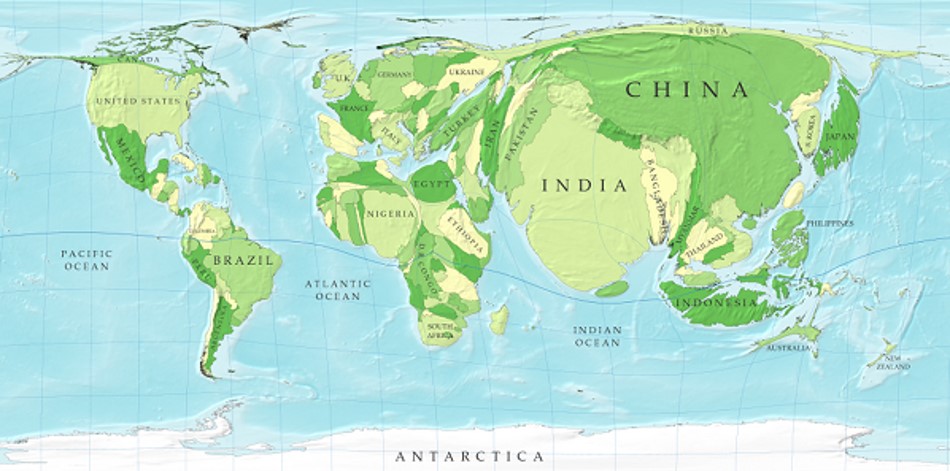
This started with the shifts in the expectations from the professionals world-wide. How the changing times and principles that respond to the changing needs result in changing scenarios especially in the developing countries. Where, according to the map below:
the countries have been mapped according to the population density that they have in their respective cities. Thus, China tops the list while India comes second. Thus, these Asian countries comprises almost 50% of the people living in the entire world in almost 1/5th of the land on this Earth. Thus, these countries have a lot of emerging potential in the upcoming years.

Also, in one of the articles written by Stan Allen, titles From Object to Field, the overarching idea is to ‘accept the reality in all its messiness’ where through different examples of the Mosque in Cordoba, St. Peter’s in Rome, he tries to explain the need of an emergent design as a result of site conditions. Both the buildings have grown with time, but the beauty lies in the addition responding to the changing times and the site conditions. Thus, in the first part of the report he talks about the ability of the designs to change over the time and the sensitivity of hte adaptations to it.
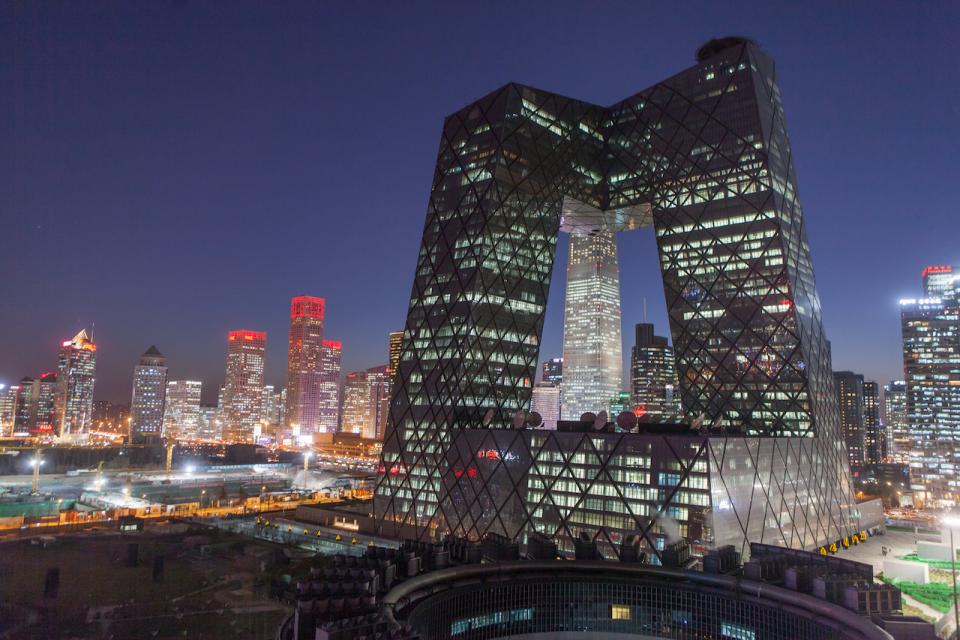
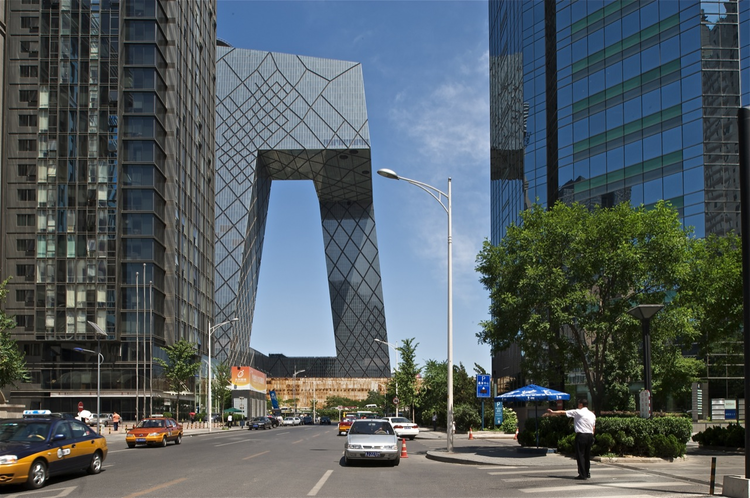
CCTV tower- A response to Hyper-modernist perspective.

Modernism phase in architecture started with defining the attributes of architecture such as function follows form, the purity of the materials, architecture to be independent of the context etc.

But the phase of Hyper-modernism was not to change/add/subtract these attributes but to refine each one of them irrespective of the truth or relevant values they hold. Hyper-modernism finds its validation in emphasis on the value of new technology to overcome natural limitations and emphasizes a dismissal of an object-driven past in favor of a flexible, attribute-driven heuristic.

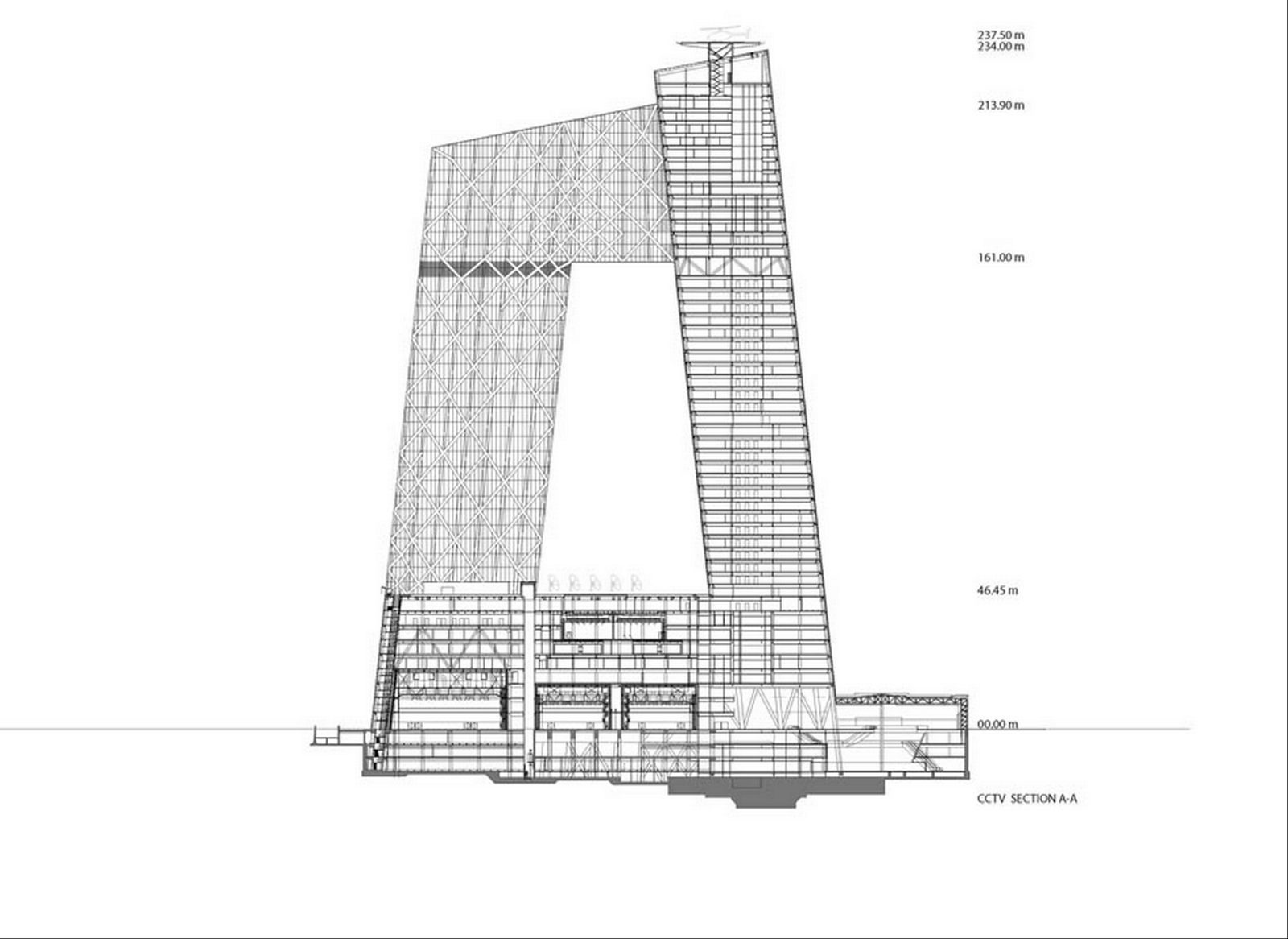
CCTV defies the skyscraper’s typical quest for ultimate height. Rising from a common platform, two towers lean towards each other and eventually merge in a perpendicular, 75- meter cantilever. The design combines the entire process of TV-making – formerly scattered in various locations across the city – into a loop of interconnected activities.

It was noted that in the period of 2000-2005 Asia constructed more number of sky scrapers than the Western world. China floated a competition of designing a skyscraper in Beijing that empowered the political ambition of the nation. OMA won the competition and proposed the CCTV tower where the ‘outer box’ was designed keeping the mundane context in mind.

If the outer skin was observed carefully, it gives insights into the structural system of the building where the truss which forms the structural system is exposed and integrated with the skin of the building. Whereas, if we look at the section of the building, one would observe that the inside spaces are similar to any office space.

Thus, this questioning of does : Form follows Function or Function follows Form has been changed to- there need not be any dependence on any of these on each other.

Thus with this inference i think that this building falls under the category of Hyper-modernist era of architecture.

Yona Friedman- a take on Hypermodernity

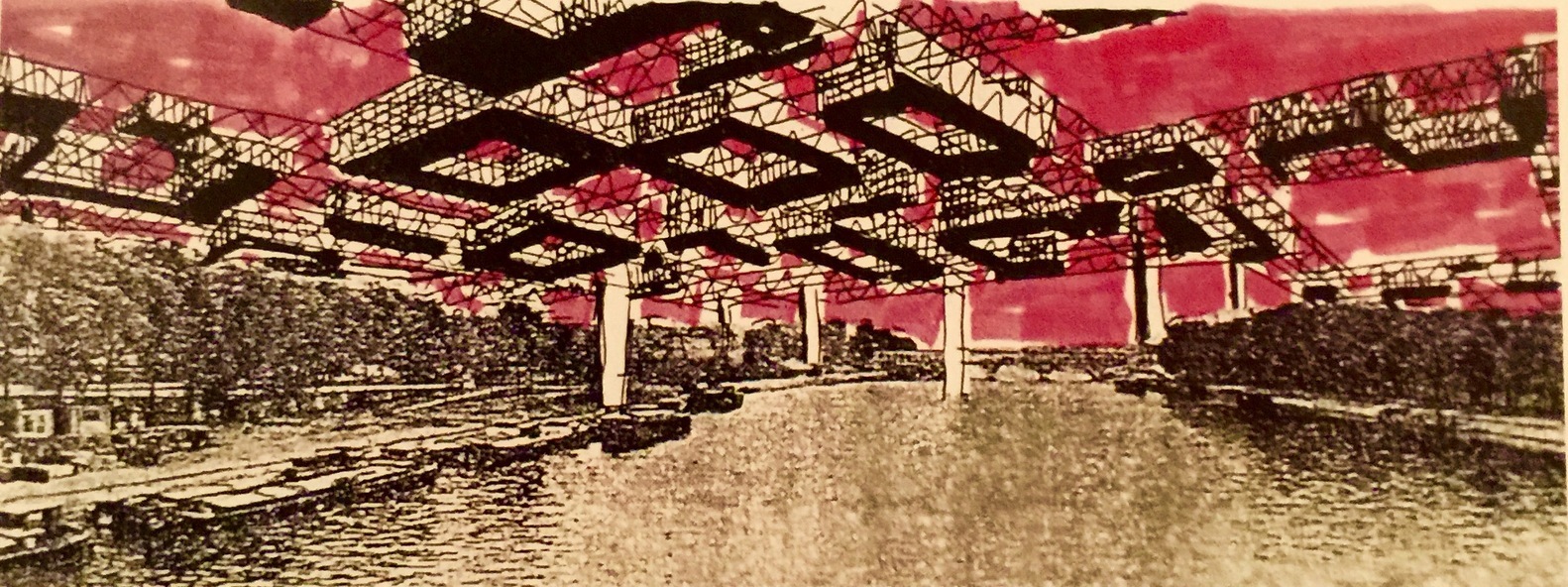
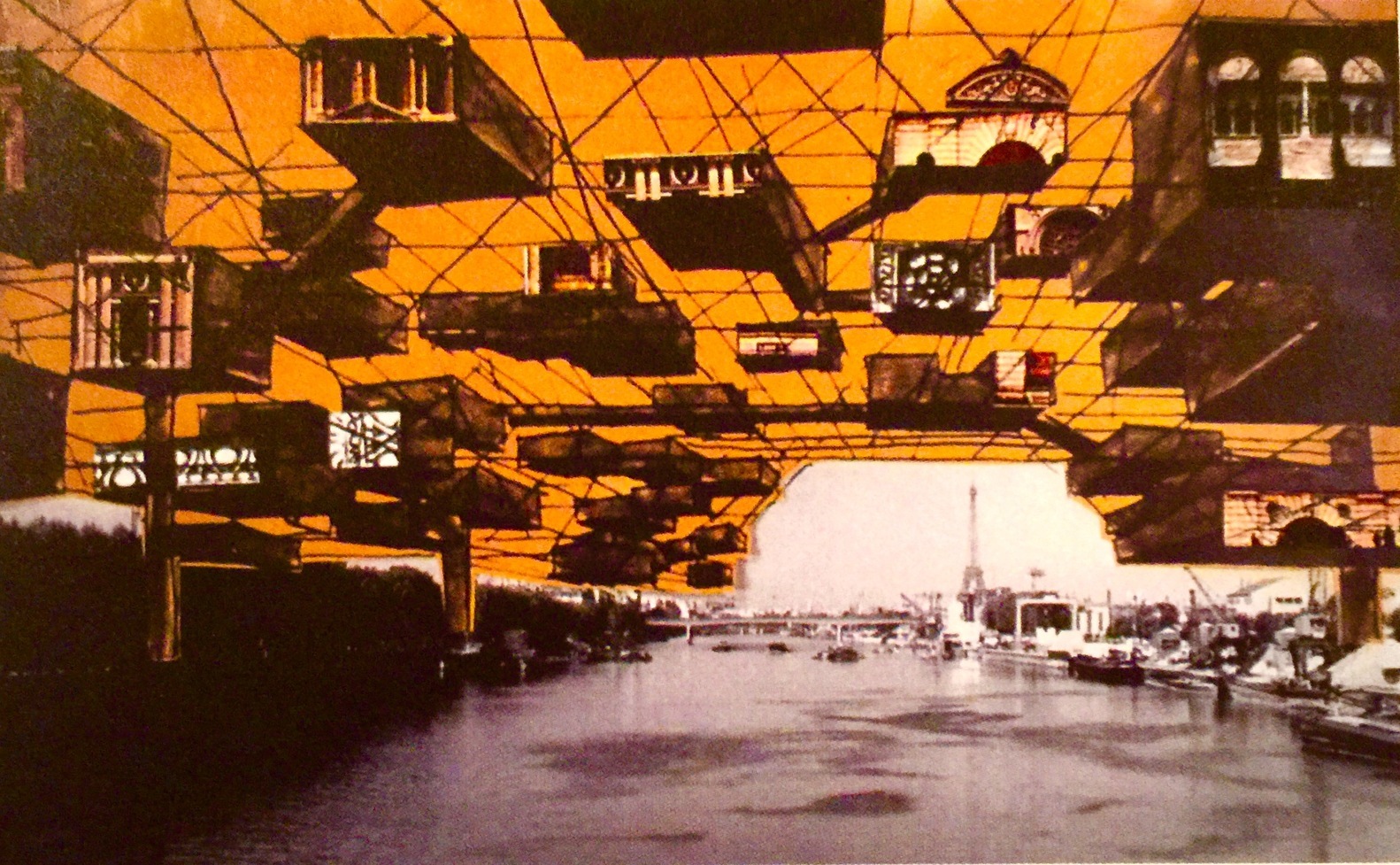
Idea of the plug-in city by Yona Friedman.

Yona Friedman is a Hungarian-born French architect, urban planner and designer. He was influential in the late 1950s and early 1960s, best known for his theory of mobile architecture. He had painted some very provocative images during the time when Modernism was at its peak and these Utopian idea floated all over the world through newsletters and journals. Modernism was the age to question the existing to generate that picture perfect image where the default mechanism was to constantly improve where the idea was to arrive at one perfect solution.

But as defined by scholars, Post-Modernism is an ongoing process where the end result doesn’t matter but the whole game is to keep on upgrading. Thus, the crux of the matter being the process to be of much more importance than the end result as it is a never ending process. Friedman’s work became famous in the 50s and the 60s when radical ideas were being expressed in the form of collages that challenged the ongoing ideas and imaged a scenario that is perfect. He imagined a city above city where the existing grid, structure of the city remains intact but the structural grid above can help the city grow. The whole idea of people plugging their homes in the grid above was then proposed by Friedman where, the stake holders are given the full responsibility of building their own homes. This, was proposed to enhance the design method that talked about the user participation in the decision making process. Thus, this again becomes an example of hyper-modernity where the process was given much more importance rather than the end result however the representation maybe.

This proposal of Ville Spatiale, was proposed after the Second World War, when a lot of destruction has already taken place at ground zero, so this proposal was lifting the city on an upper level and having minimum impact on the ground. According to Friedman, this was not an ultimate solution for designing the upcoming cities but was just a proposal that can constantly be tried and worked on to achieve better results. According to him this was a trial and error process that pushes forward in any technology. He tweaked the term hyper-modernity into:

”  A plan conceived on paper may be a good idea, but that’s all it is. Everything needs to be tested and improved all the time. “

Thus, as a personal take hyper-modernity is a constantly evolving phenomenon. Its like this never-ending loop that never gets to the end point. In this age of modern technology there is always an